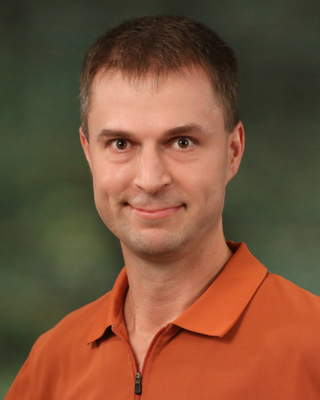
 Daniel Stenberg, a Mozilla senior network engineer and the creator of the cURL open source library, has been denied entry to the United States, he revealed early Tuesday morning in a tweet. Daniel Stenberg, a Mozilla senior network engineer and the creator of the cURL open source library, has been denied entry to the United States, he revealed early Tuesday morning in a tweet.
Stenberg was coming for business to All Hands, a twice-yearly Mozilla conference bringing together staff and volunteers that began Monday. An hour after tweeting, "On my way to San Francisco and Mozilla," he said this:
That took an unexpected turn. I'm denied entry by ESTA out of the blue. So ... no trip for me I suppose. Shocked really. What a disappointment. ... I can't think of a single good reason why they would do this.
ESTA is the Electronic System for Travel Authorization, which is used by U.S. Customs and Border Protection. Stenberg said that he was checking in at Arlanda Airport north of Stockholm when told he couldn't fly. "I couldn't check in online for unknown reasons so I approached the counter, where they informed me," he said. No reason was given for the refusal. The cURL library is used by software to download data across websites and web services using HTTP, FTP and many other protocols. I've used it on many of my sites, often to get RSS feeds. The cURL site states, "It is also used in cars, television sets, routers, printers, audio equipment, mobile phones, tablets, set-top boxes, media players and is the internet transfer backbone for thousands of software applications affecting billions of humans daily." The project had its 20th anniversary earlier this year on April 8. Our son, our sweet little Daniel, was just 7 when he was murdered in his first-grade classroom at Sandy Hook Elementary School on Dec. 14, 2012. We are among the 10 families suing the manufacturer, distributor and retail seller of the assault rifle that took 26 lives in less than five minutes on that terrible day.
We write in response to Sen. Bernie Sanders's comments about our lawsuit at the recent Democratic presidential debate in Michigan. Sanders suggested that the "point" of our case is to hold Remington Arms Co. liable simply because one of its guns was used to commit mass murder. With all due respect, this is simplistic and wrong. 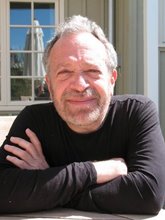 Robert Reich: I've been reluctant to use the "f" word to describe Donald Trump because it's especially harsh, and it's too often used carelessly. Robert Reich: I've been reluctant to use the "f" word to describe Donald Trump because it's especially harsh, and it's too often used carelessly.
But Trump has finally reached a point where parallels between his presidential campaign and the fascists of the first half of the 20th century -- lurid figures such as Benito Mussolini, Joseph Stalin, Adolf Hitler, Oswald Mosley, and Francisco Franco -- are too evident to overlook.
It's not just that Trump recently quoted Mussolini (he now calls that tweet inadvertent) or that he's begun inviting followers at his rallies to raise their right hands in a manner chillingly similar to the Nazi "Heil" solute (he dismisses such comparison as "ridiculous.")
The parallels go deeper. 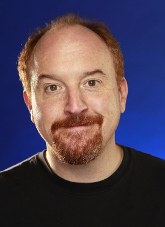 P.S. Please stop it with voting for Trump. It was funny for a little while. But the guy is Hitler. And by that I mean that we are being Germany in the 30s. Do you think they saw the shit coming? Hitler was just some hilarious and refreshing dude with a weird comb over who would say anything at all. P.S. Please stop it with voting for Trump. It was funny for a little while. But the guy is Hitler. And by that I mean that we are being Germany in the 30s. Do you think they saw the shit coming? Hitler was just some hilarious and refreshing dude with a weird comb over who would say anything at all.
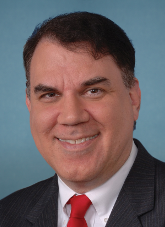 Alan Grayson: Last summer, my 16-year-old daughter asked me whether I felt the Bern. "Did you leave the stove on again?" I asked her. Now, after listening to We, the People, I feel the Bern. I hereby endorse Bernie Sanders to be our Democratic nominee for President of the United States. I will vote for him as a superdelegate at the Democratic National Convention. And I enthusiastically join, shoulder to shoulder, his political revolution. Alan Grayson: Last summer, my 16-year-old daughter asked me whether I felt the Bern. "Did you leave the stove on again?" I asked her. Now, after listening to We, the People, I feel the Bern. I hereby endorse Bernie Sanders to be our Democratic nominee for President of the United States. I will vote for him as a superdelegate at the Democratic National Convention. And I enthusiastically join, shoulder to shoulder, his political revolution.
Perhaps inspired by the Bernie Sanders message of "Not me. Us," for the past several days, I have appealed to Democrats across the nation to tell me for whom I should vote, as a superdelegate at the Democratic National Convention. The response has been absolutely overwhelming. Almost 400,000 Democrats voted at GraysonPrimary.com. More than the number who voted in the South Carolina primary. More than the number who voted in the New Hampshire primary and the Nevada caucus combined. 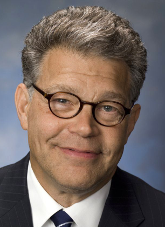 Al Franken: If you watched the Republican debate on Thursday, you probably noticed the candidates agreeing that insurance companies should be allowed to sell policies across state lines. Al Franken: If you watched the Republican debate on Thursday, you probably noticed the candidates agreeing that insurance companies should be allowed to sell policies across state lines.
"We have to get rid of the lines around the states," said Donald Trump, making vigorous circles with his hands for emphasis, "so that there's serious, serious competition." It would, he promised, "be a beautiful thing."
This is often presented as the Republicans' Big Idea on health care -- in fact, as with Trump, it's often the only idea they can come up with. But it isn't a serious plan for improving our nation's health care system. In fact, it's absolute nonsense. Al Gore: Last week, I had the pleasure of participating in TEDTalks 2016 where I discussed many of the challenges presented by the climate crisis. But a powerful shift has been taking place, and it is clear that we will ultimately prevail. ... There are now only three questions we have to answer about climate change and our future. MUST we change? CAN we change? WILL we change?  Robert Reich: Step back from the campaign fray for just a moment and consider the enormity of what's already occurred. Robert Reich: Step back from the campaign fray for just a moment and consider the enormity of what's already occurred.
A 74-year-old Jew from Vermont who describes himself as a democratic socialist, who wasn't even a Democrat until recently, has come within a whisker of beating Hillary Clinton in the Iowa caucus, routed her in the New Hampshire primary, and garnered over 47 percent of the caucus-goers in Nevada, of all places.
And a 69-year-old billionaire who has never held elective office or had anything to do with the Republican Party has taken a commanding lead in the Republican primaries.
Something very big has happened, and it's not due to Bernie Sanders' magnetism or Donald Trump's likeability.
It's a rebellion against the establishment. Eben Moglen: In the third chapter of his History of the Decline and Fall of the Roman Empire, Edward Gibbon gave two reasons why the slavery into which the Romans had tumbled under Augustus and his successors left them more wretched than any previous human slavery. In the first place, Gibbon said, the Romans had carried with them into slavery the culture of a free people: their language and their conception of themselves as human beings presupposed freedom. And thus, says Gibbon, for a long time the Romans preserved the sentiments -- or at least the ideas -- of a freeborn people. In the second place, the empire of the Romans filled all the world, and when that empire fell into the hands of a single person, the world was a safe and dreary prison for his enemies. As Gibbon wrote, to resist was fatal, and it was impossible to fly. Until the 1980s, corporate CEOs were paid, on average, 30 times what their typical worker was paid. Since then, CEO pay has skyrocketed to 280 times the pay of a typical worker; in big companies, to 354 times. Meanwhile, over the same 30-year time span the median American worker has seen no pay increase at all, adjusted for inflation. Even though the pay of male workers continues to outpace that of females, the typical male worker between the ages of 25 and 44 peaked in 1973 and has been dropping ever since. Since 2000, wages of the median male worker across all age brackets has dropped 10 percent, after inflation. This growing divergence between CEO pay and that of the typical American worker isn't just wildly unfair. It's also bad for the economy. |

